Strong candidates lose out for fixable reasons
Most PhD scientists have more to offer than their resume shows. The ones who struggle tend to fall into one of two traps.
Under-translated
The resume describes a lab, not a contribution. Years of real work read like a shrunken CV, and the reader can't see what you could do for them.
Over-claimed
A line is stretched a little past what really happened, and it wobbles under the second polite follow-up question. Rarely a lie, but costly all the same.
Three habits that do the heavy lifting
One master document
Keep everything you've ever done in one private place, and build every resume from it instead of rebuilding from memory.
Score jobs against it
A resume is a lossy summary of you. Judge each posting against the full record, not your last draft.
Be exact
Not modest. Not inflated. Say precisely what you did, in words the reader already uses.
One kit, from first doubt to first day
Read it front to back, or jump to the part you need this week.
The mindset shift
How academia and industry really differ, and what to unlearn.
Resume vs CV
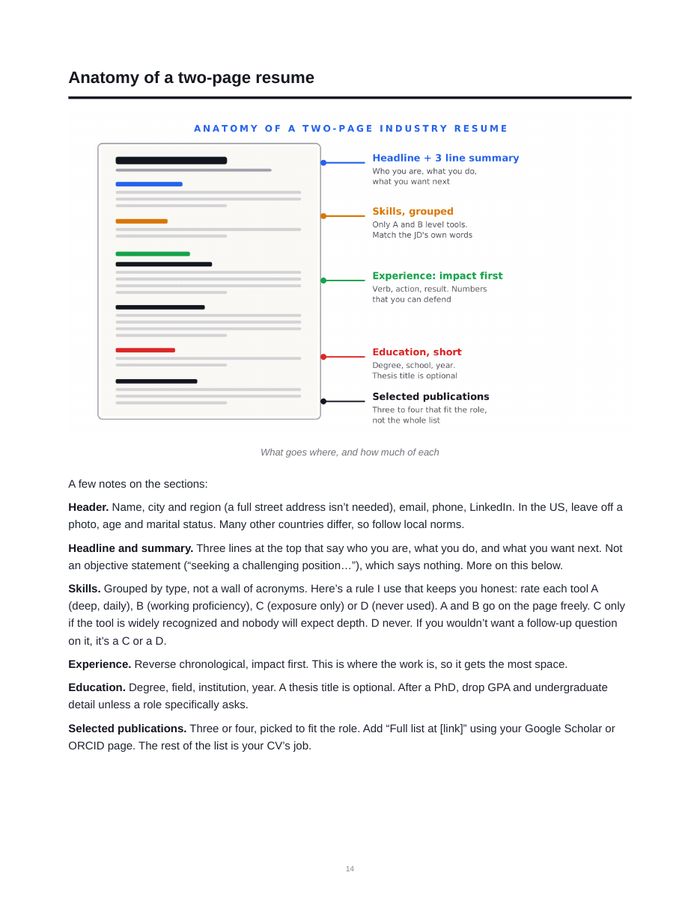
A two-page structure and a bullet formula that works.
Translate your experience
Lab language to hiring language, plus a map of common roles.
The Master Profile
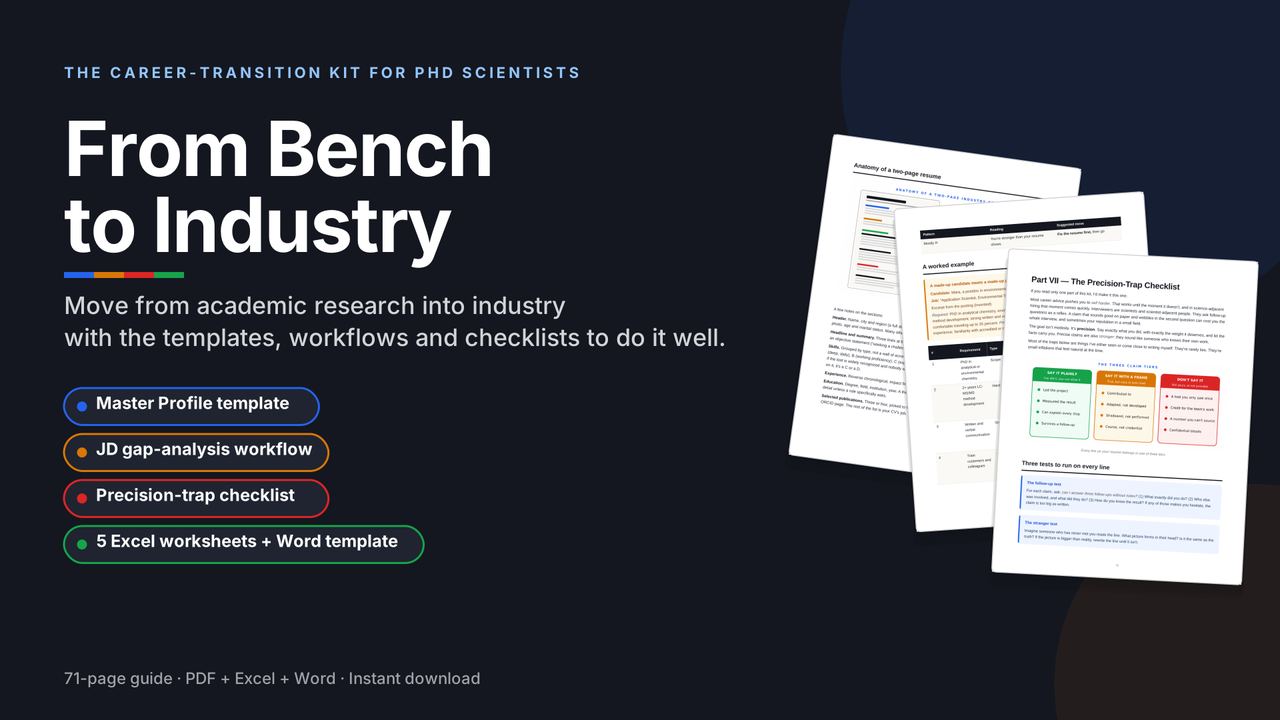
A private 13-section source document, with an editable Word template.
JD gap analysis
A repeatable method for weighing any job description against your own record, ending in a clear go, stretch or skip.
Precision-trap checklist
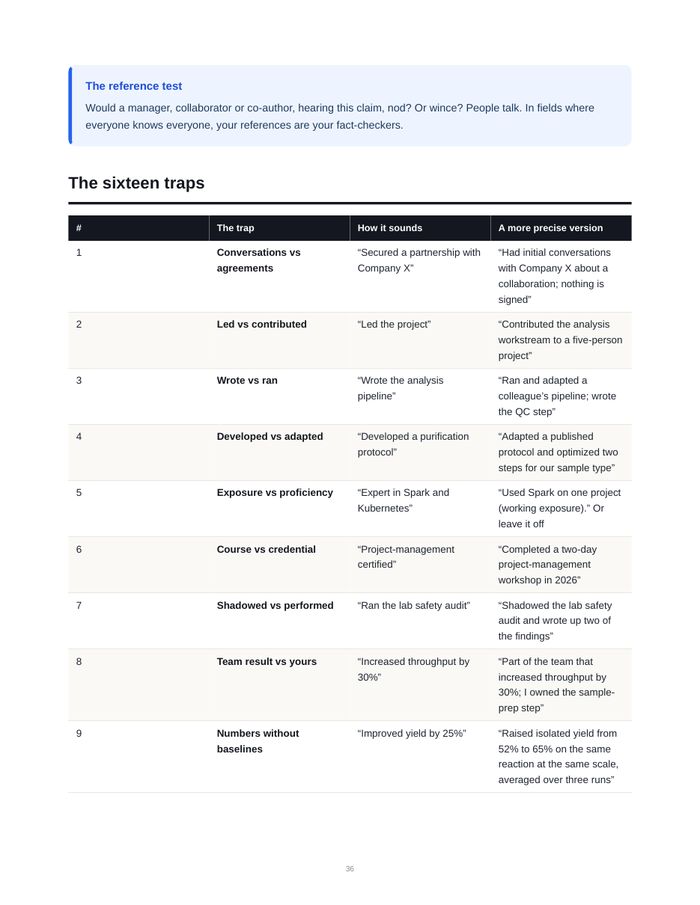
Sixteen ways good candidates overclaim without meaning to, with a fix for each.
Interviews and offers
A story bank, answers to the questions you'll dread, and how to read an offer.
Networking and first 90 days
Message templates, a weekly rhythm and a 30-60-90 plan.
Plus a 13-prompt pack for Claude or ChatGPT (optional), and a glossary of 150+ terms you'll hear in your first two years.
Real pages, not a promise
Seven files, instant download
- 71-page PDF guide. Read on any device and print the worksheets.
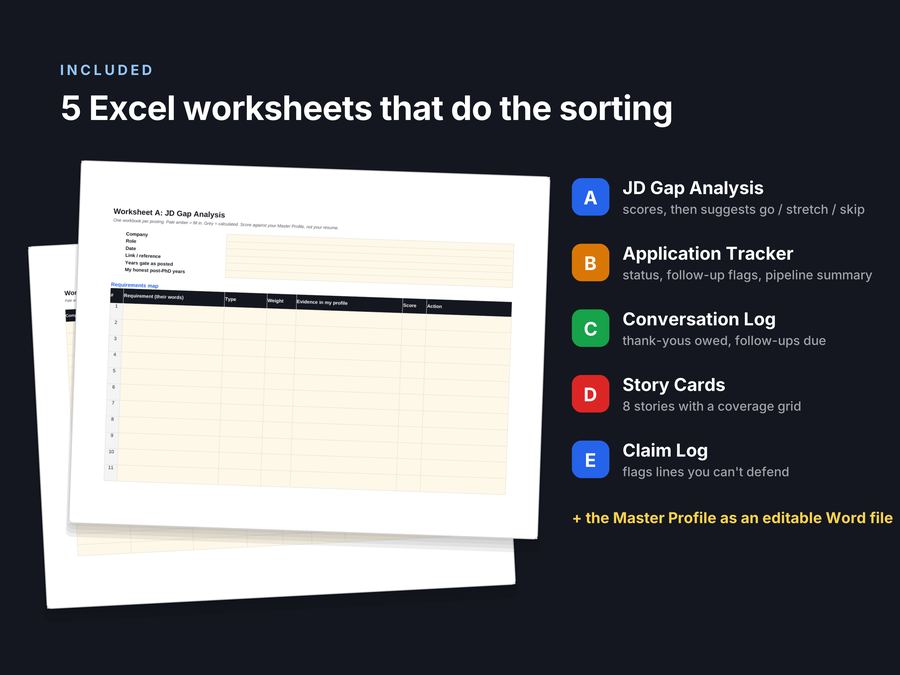
- 5 Excel worksheets. JD Gap Analysis, Application Tracker, Conversation Log, Story Cards and Claim Log, with drop-downs, formulas and follow-up flags built in.
- Master Profile template. An editable Word file for your private record.
Who it's for
- MS and PhD scientists and postdocs in biology, chemistry, physics and other STEM fields
- People thinking about, or already making, a move to industry
- Anyone whose resume still reads like a CV
Who it's not for
- Anyone looking for a guarantee. No kit can promise a job, an interview or a salary, and this one doesn't.
- Anyone who wants a resume written for them. This is a method and a set of tools, and you do the work.
I've been on both sides of the table: as a candidate, and reading resumes and sitting in on interviews. I kept seeing the same patterns, so I wrote the system I wish I'd had. It's practical, it's honest about what it can't do, and it never asks you to overstate anything.
Questions
Do I need Excel?
The five worksheets are .xlsx files and open in Excel, Google Sheets or LibreOffice. They were tested most thoroughly in Excel-compatible software.
Is it only for biology or chemistry?
It's written with life-science, chemistry and physical-science PhDs in mind, but the method works for any research field.
Do I have to use AI?
No. The prompt pack is optional, and the kit works fine without it. If you do use it, the kit includes ground rules so the assistant sticks to your facts.
Will this get me a job?
No kit can promise that. It aims to make your resume, your claims and your conversations stronger, so you don't lose opportunities for avoidable reasons.
Can I use it with my current employer's information?
No, and the kit tells you why. It teaches you to describe what you can do without sharing confidential or unpublished material.
Can I share it?
Personal use only, please. One license per buyer.
Make your record easy to read, and easy to defend
Instant download. Seven files. No fluff.